

An AI companion that checks for crisis before it answers.
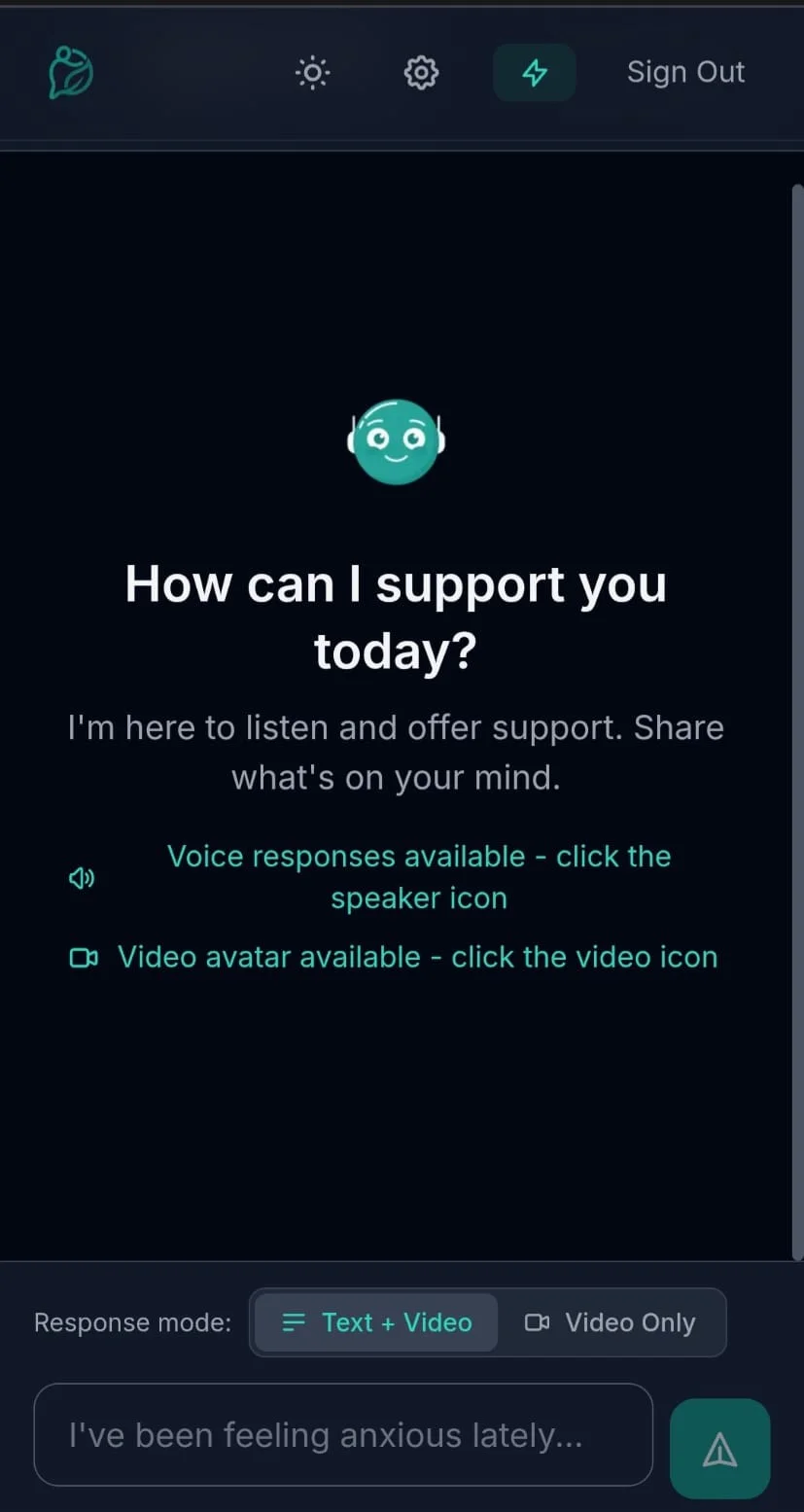
AdviceBuddy is a mental-wellness companion from a US founder, now sold mainly to employers as a benefit for their staff. People can text it, hear it speak, or talk to a video avatar, any time of day. We built the whole product: the web app, the AI running on our own GPUs, billing for individuals and companies, and the employer dashboard.
Wellness AI can't be wrong in the moments that matter.
The founder wanted an always-available companion for stress and anxiety that people would actually pay for, and later that companies could offer their employees. That set four hard requirements.
Crisis messages can't slip through
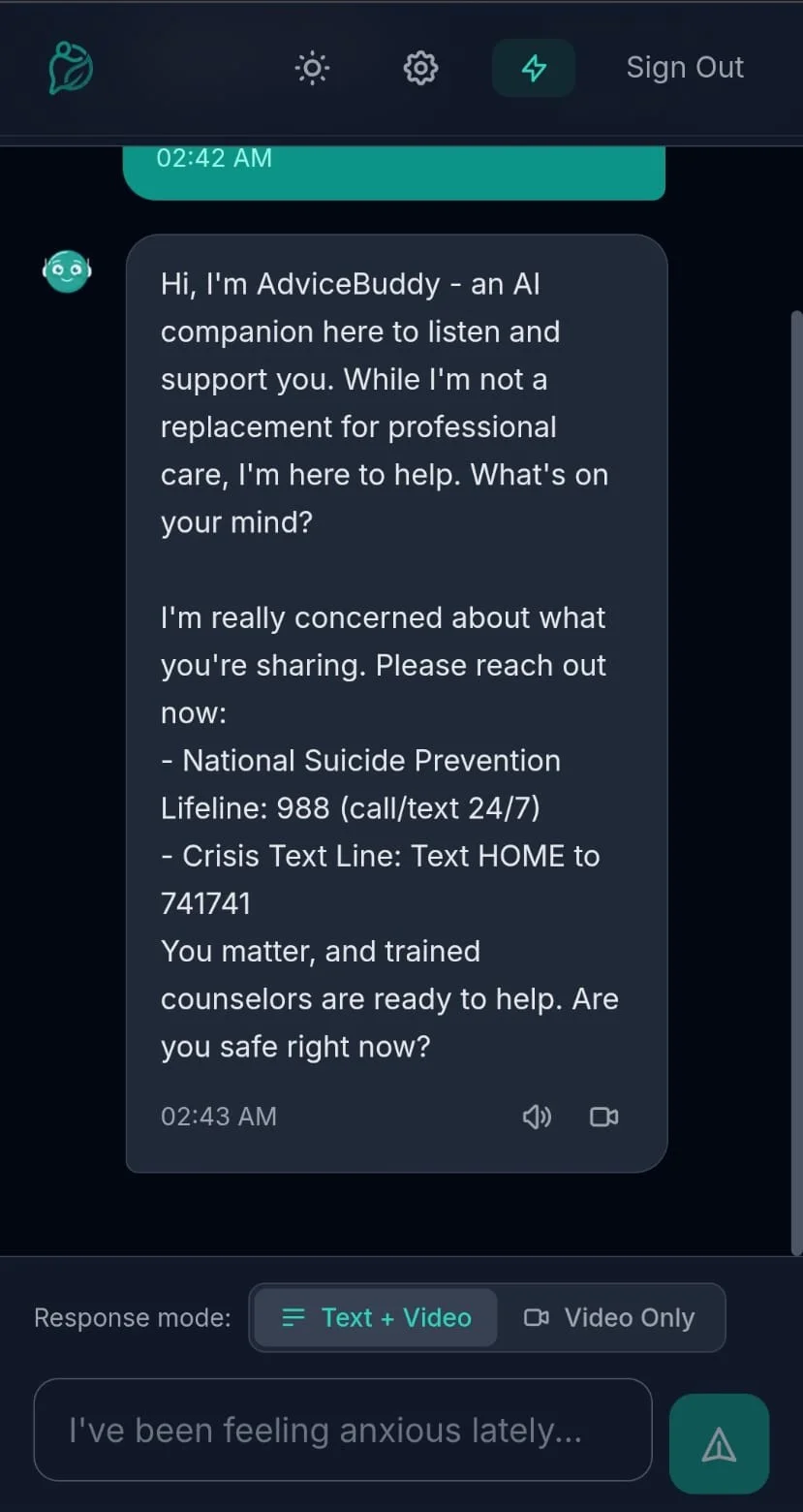
If someone writes about ending their life, the reply has to be crisis resources every time, even when the words are misspelled, spaced out or typed with look-alike characters.
Conversations stay private
These are some of the most personal things people type. The founder didn't want them sent to a third-party AI company.
GPUs are expensive
Running your own model and a video avatar means GPU time. It had to be paid for per use, and every plan's limits had to hold, including against people abusing the free trial.
Companies need oversight
An employer buying seats wants to know the benefit is used and whether their people are struggling, without reading anyone's chats.
One companion, three ways to talk to it.
Text, voice and a video avatar
Replies come as text, as speech in the voice and accent the user picks, or from a lip-synced video avatar they choose. Visitors can try three messages on the homepage before signing up.
Mood that shapes the reply
A daily check-in asks for depression, stress and anxiety on a 1–10 scale and what triggered them. The companion uses it as context. When any score is 8 or higher, it suggests a licensed therapist from an approved directory, at most once a week.
PHQ-9, GAD-7 and PSS-4
Standard depression, anxiety and stress questionnaires, scored on the server. Results are visible to admins only, and any answer above zero on the self-harm question is flagged for follow-up.
Seats and a dashboard
Companies buy 25 to 100 seats with a 3-day trial and get a dashboard with activity, mood trends, top triggers, assessment distributions and an at-risk list, plus company-wide default settings.
Our own model, on GPUs rented by the second.
What talks back
- Llama 3.1 8B Instruct on A10G GPUs, weights on Modal volumes, containers started from memory snapshots for short cold starts
- MuseTalk lip-syncs the chosen avatar to the spoken reply on a second GPU service
- Edge TTS for voice replies, with male and female voices in several accents
- Replies trimmed to about 85 words so they read like a conversation
What holds it together
- Next.js 14 · React · TypeScript · Tailwind, on Vercel
- Supabase Postgres with row-level security; message limits reserved in one database transaction so they can't be raced
- Stripe for individual plans, team seats and the self-service portal
- Guest sessions limited per IP, and every video reply tied to a real message and counted against the visitor’s limit
Why it was built this way.
Safety in code, not in the prompt
Every message is normalised before it reaches the model: invisible characters, accents and look-alike letters are stripped, leetspeak is undone, and words are also matched with the gaps removed, so “s-u-i-c-i-d-e” and “su1c1de” are caught. A match returns crisis resources, 988 and HOME to 741741, instead of a model reply.
Self-hosted, so chats stay ours
Running an open model on rented GPUs keeps conversations away from third-party AI companies, and the bill follows real usage instead of paying for idle servers.
Employers see trends, not chats
The dashboard shows mood, triggers and scores so a company knows when to step in, and never exposes what anyone said to the companion.
A visual language designed to feel like a deep breath.
A calming deep teal palette, soft mint backgrounds, and warm sand tones — paired with type that reads like it's listening, not lecturing.
Built for clarity and focus.
A product that pays for its own GPUs.
Two ways to sell
Individual plans from $10 to $59 a month and team plans at $10 a seat, all with a 3-day free trial, billed through Stripe.
Crisis handled before the model
Obfuscated crisis language is caught before generation, and self-harm answers in assessments are flagged for a person to follow up.
A path to a real therapist
High-distress check-ins lead to approved, licensed therapists, and therapists can apply to join the directory.
Limits that hold
Plan limits are reserved atomically in the database, and guest and video abuse is capped per IP and per message.
Building AI in a domain that can't tolerate slop?
If your product handles sensitive conversations and needs to behave responsibly — let's talk.